
Generative AI brings both opportunity and risk: it can amplify misinformation that threatens democracy, fuel online fraud that harms the digital economy, and enable Foreign Information Manipulation and Interference. On 21 August 2025, Safer Internet Lab (SAIL) and the Center for Digital Society (CfDS) UGM convened the Information Resilience and Integrity Symposium (IRIS) at the Faculty of Social and Political Sciences (FISIPOL), Universitas Gadjah Mada (UGM), to address these challenges.
Under the theme “Generative AI and Information Resilience in the Asia-Pacific: Actions and Adaptions,” IRIS brought together policymakers, industry representatives, and academics to exchange ideas and propose sustainable responses to emerging challenges.
The event was divided into two main sessions:
Plenary session
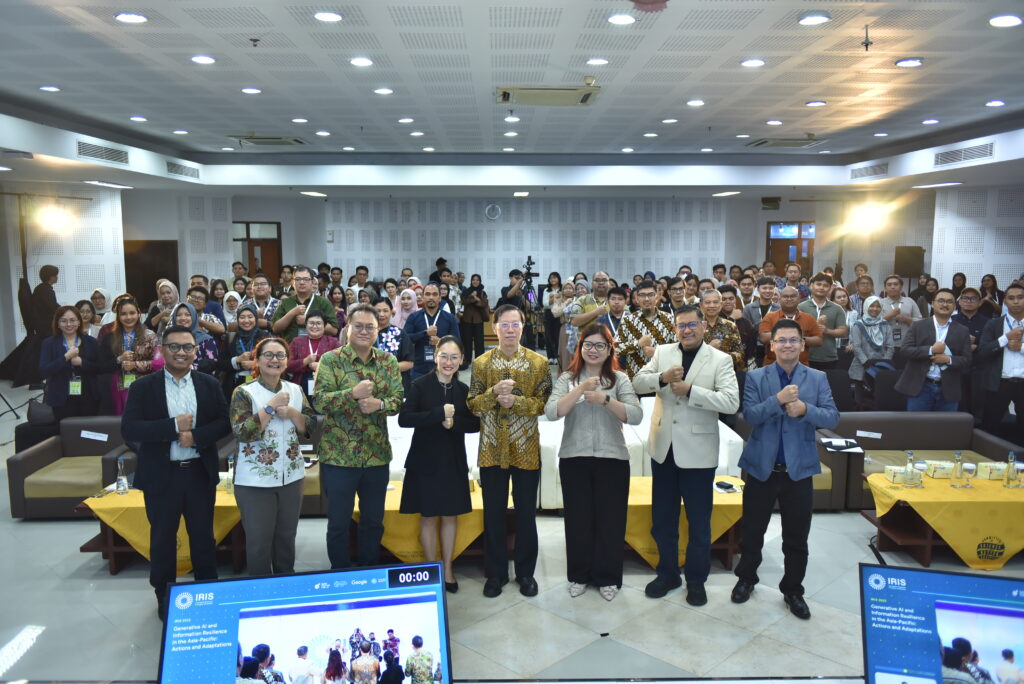
The event opened with remarks from Prof. Wening Udasmoro, Vice-Rector of Universitas Gadjah Mada. She emphasized the role of academia in bridging policy, research, and public understanding around generative AI.
This was followed by Dr. Yose Rizal Damuri, Executive Director of CSIS, who explained both the opportunities and risks of GenAI in the Asia-Pacific region.
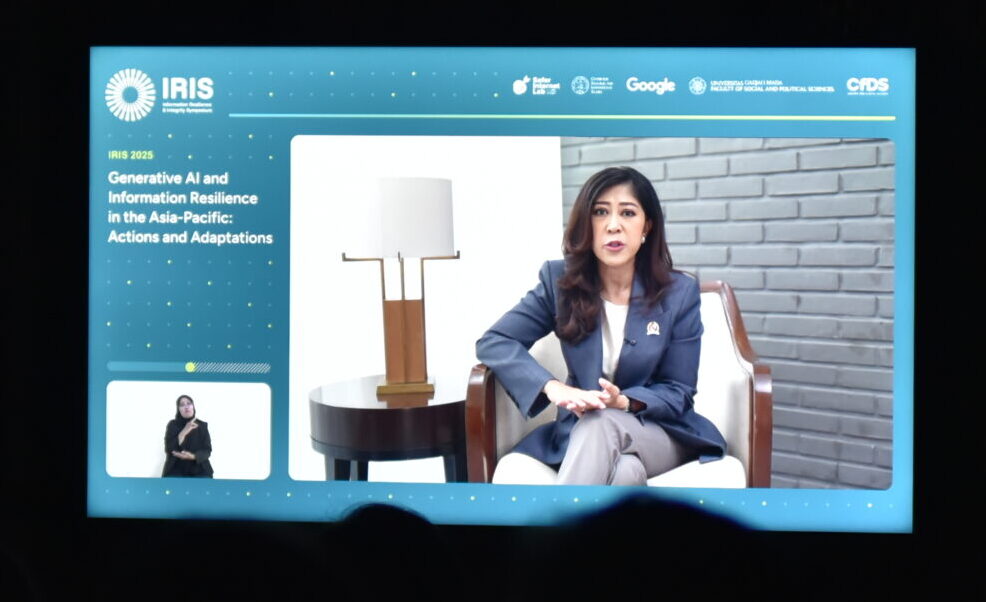
Meutya Viada Hafid, Indonesia’s Minister of Communications and Digital Affairs (Komidigi), delivered a keynote highlighting strong enthusiasm for AI adoption in Indonesia. The government is committed to harnessing this momentum while carefully navigating the risks. “Our task is to harness this optimism responsibly.” Toward that end, Meutya called for stronger investment in human development. “Technology alone can’t build the future, people do,” Meutya said.
The session continued with a public lecture by Prof. Ang Peng Hwa from Nanyang Technological University (NTU). He explained how GenAI is reshaping society, reducing diversity in cultural and personal experiences and fostering dependency that weakens critical thinking. “AI has converged into one point. This is the problem with GenAI,” explained Prof. Ang. As AI is a prediction machine, it tends to reduce output into one number, one word, one image. This nature of AI poses risk to the uniqueness of human experience. Prof. Ang called for a coordinated approach—involving government, business, academia, civil society, and religious groups—to ensure AI supports social resilience.
A strategic dialogue followed, featuring Wijaya Kusumawardhana (Ministry of Communications and Digital Affairs (Komdigi)), Prof. Ang Peng Hwa; and Dr. Maria Monica Wihardja (ISEAS – Yusof Ishak Institute). The dialogue was moderated by Prof. Dr. Poppy Sulistyaning Winanti and examined the rapid development of AI technology and its broader implications.
Panel sessions
IRIS also featured four panel discussions:
- GenAI-driven financial fraud
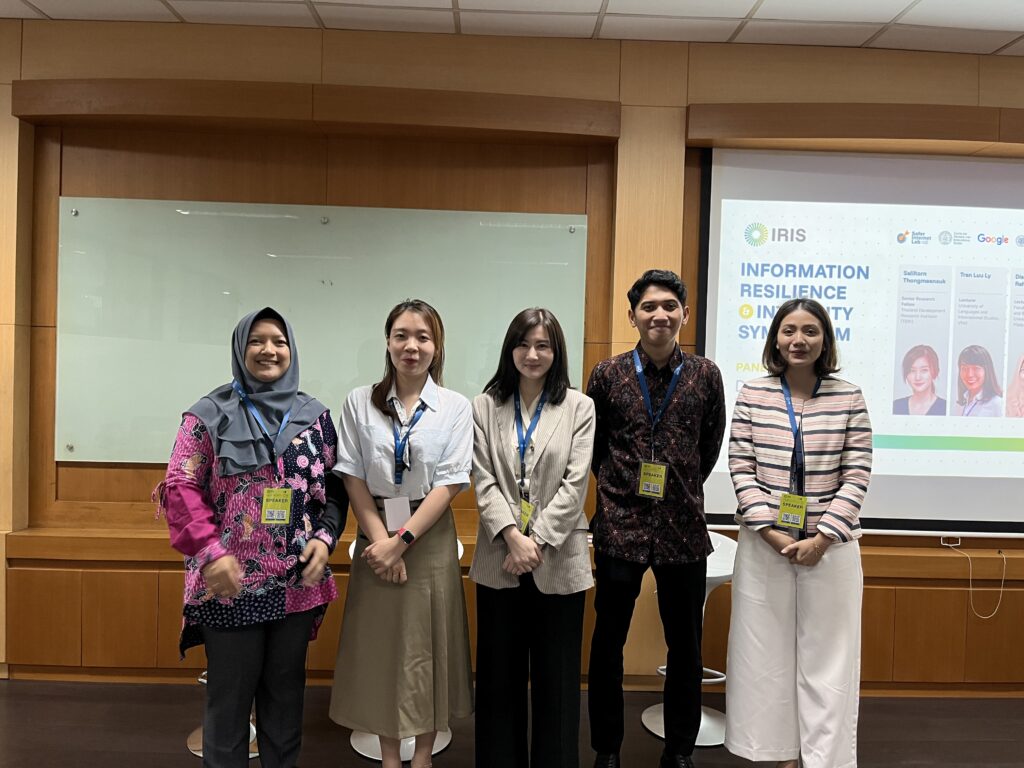
Speakers: Saliltorn Thongmeensuk (Thailand Development Research Institute) Tran Luu Ly (University of Languages and International Studies, VNU), Dian Kartika Rahajeng, Ph.D., (Faculty of Economics and Business, UGM), and Adinova Fauri, (Centre for Strategic and International Studies).
Moderator: Dian Fatmawati (Faculty of Social and Political Sciences, UGM).
- Surveillance and privacy
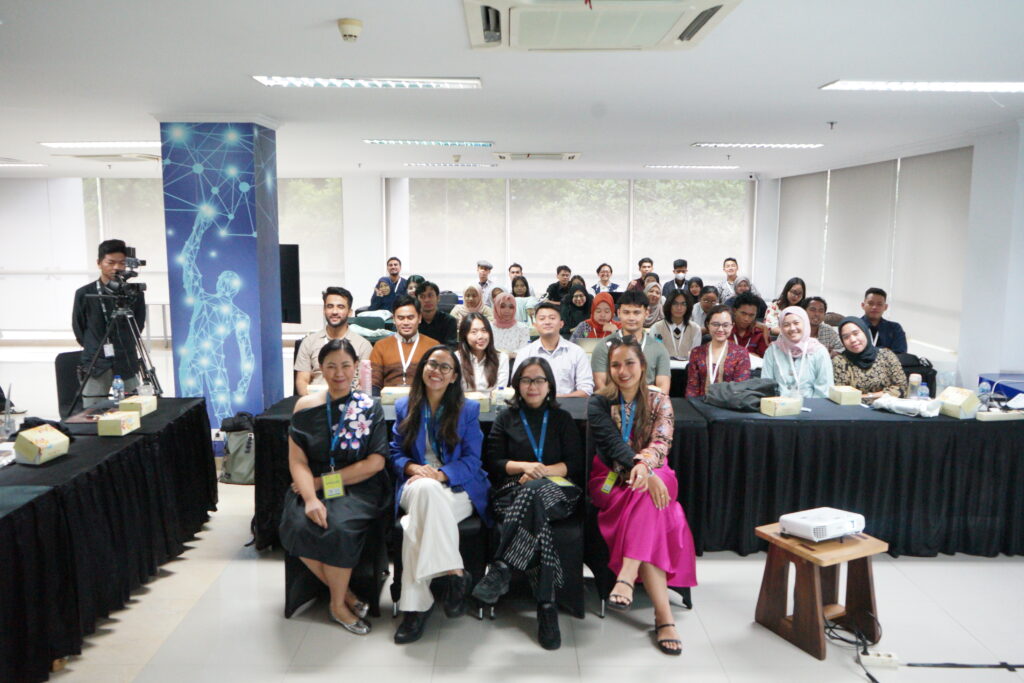
Speakers: Dr. Karryl Kim Sagun Trajano (S. Rajaratnam School of International Studies), Dr. Surachanee Sriyai (ISEAS–Yusof Ishak Institute), Alfatika Aunuriella Dini (Faculty of Law, UGMU), and Alia Yofira (PurpleCode Collective).
Moderator: Hafiz Noer (Center for Digital Society (CfDS)).
- Regional responses to foreign information manipulation
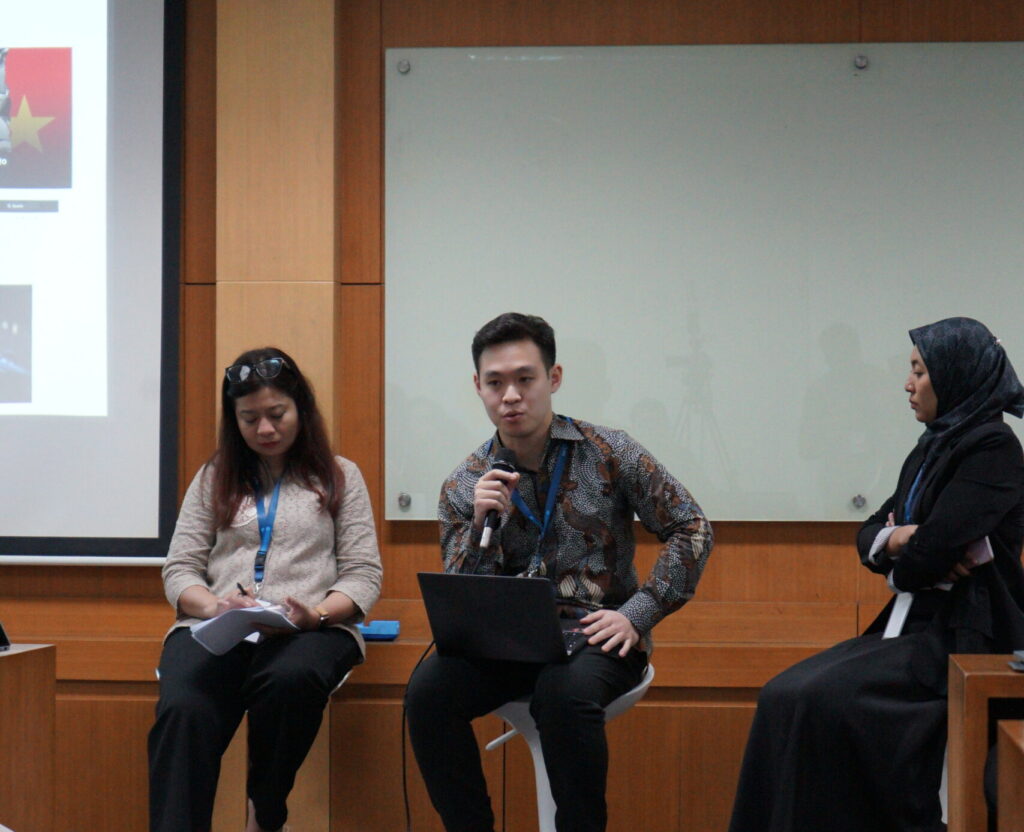
Speakers: Maria Elize Mendoza (University of the Philippines Diliman), Farhan Julianto, (University of Melbourne), Pieter Pandie (Centre for Strategic and International Studies) and Pratiwi Utami (Faculty of Social and Political Sciences, UGM).
Moderator: Syaifa Tania (Center for Digital Society (CfDS))
- The role of information in democratic resilience
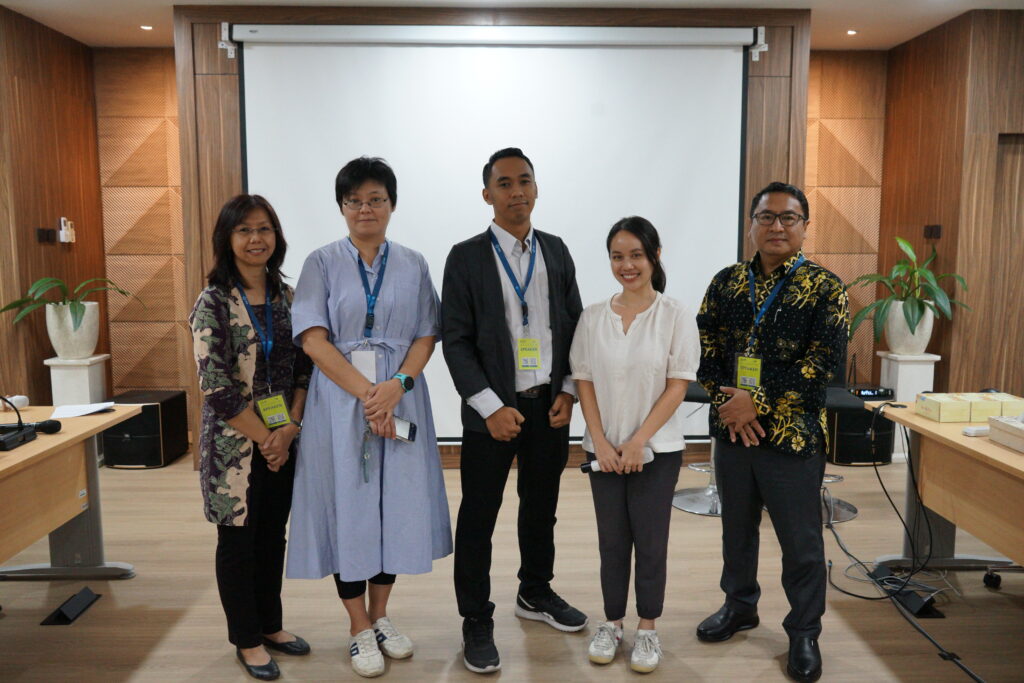
Speakers: Summer Chen (FactLink Taiwan), Rahmat Fauzi (Pilkada.AI), Michelle Anindya (freelance journalist), and Dr. Abdul Gaffar Karim (Faculty of Social and Political Sciences, UGM)
Moderator: Titik Firawati (Faculty of Social and Political Sciences, UGM).
Across these sessions, IRIS raised public awareness of GenAI’s risks and opportunities, fostered cross-sector dialogue, and shared SAIL’s research as a resource for policy development.
Missed the session? Watch it here.